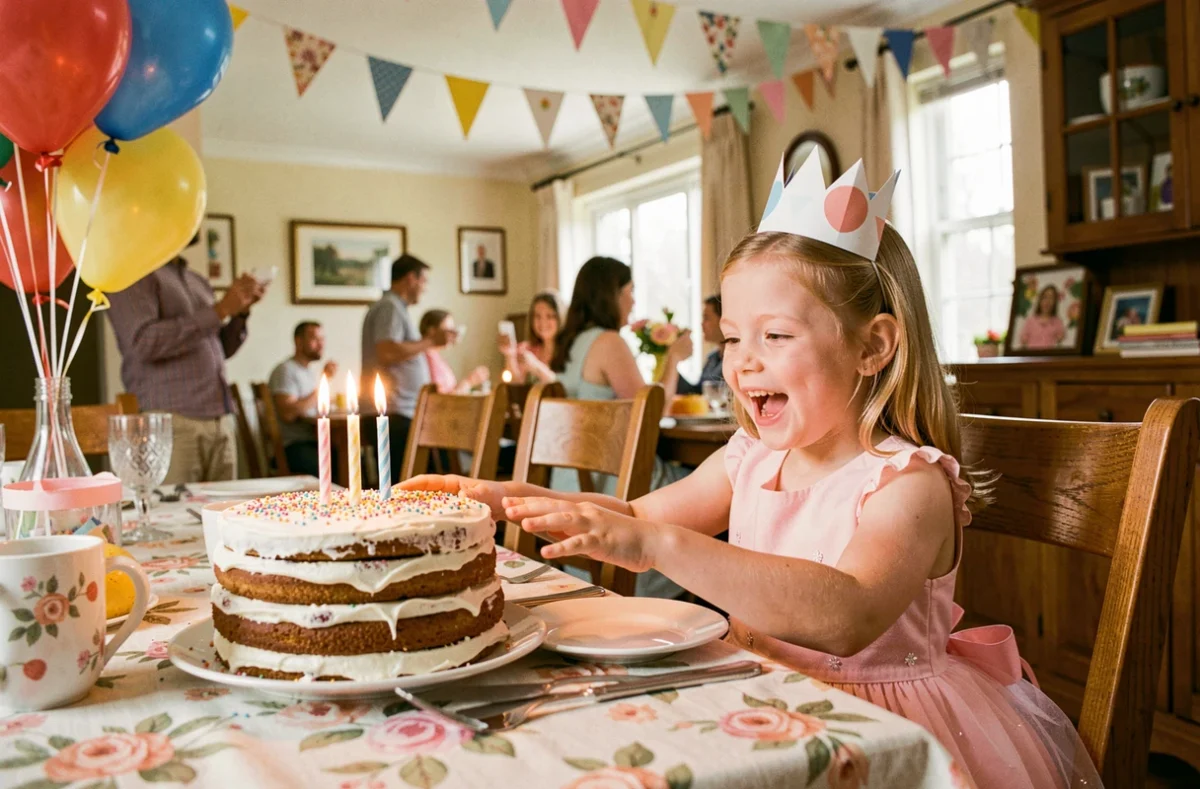
A child’s birthday relies on a series of logistical decisions made several weeks before the big day. Choosing the venue, managing food allergies, and ensuring the small gifts given to guests are appropriate: each aspect requires careful planning to avoid last-minute improvisation.
Food Allergies at Birthday Snacks: A Data Point to Collect from the Invitation
Most organizational guides treat the snack as a matter of recipes and cake decoration. The real issue beforehand is the systematic collection of allergies and intolerances right from the moment invitations are sent out.
Recent professional recommendations suggest explicitly asking about allergies, intolerances, and special diets when planning the snack, and then confirming this information before the event. A separate and clearly labeled plate is preferable when an allergy is confirmed, especially in the presence of a shared buffet.
In practice, add a dedicated line on each invitation card (paper or digital) with a direct wording: “Please indicate any allergies or dietary restrictions.” Follow up with parents who haven’t responded at least a week before the party. This step prevents discovering on the big day that a child cannot eat anything from the buffet.
For the birthday cake itself, opt for a nut-free recipe if you don’t have all the answers yet. Gluten-free or lactose-free alternatives can be easily prepared at home, provided they are planned in advance. Offering a catalog of suitable activities and supplies on a site like Kids Paradise also helps find tableware and decorations compatible with a themed snack.
Toy Safety for Guests: CE Marking and Minimum Age
Surprise bags (or “gift pouches”) are part of the birthday party traditions. Their contents raise a concrete issue: the compliance of the small toys given to the invited children.
The European regulation (EU) 2025/2509 on toy safety, which is set to come into general application on August 1, 2030, strengthens the requirement for CE marking, clear age indication, and identification of the manufacturer. Without waiting for this deadline, these criteria already serve as a common-sense filter at the time of purchase.
What to Check Before Filling Surprise Bags
- The CE marking must be present on the toy or its packaging, not just on the store display.
- The minimum age indication (“not suitable for children under 3 years,” for example) must correspond to the actual age of the youngest guest.
- Sensory or “trendy” toys (squishies, fidgets, slime) deserve a check after purchase: presence of a strong chemical smell, small detachable parts, texture that degrades quickly.
Buying in bulk on marketplaces without checking these points risks distributing non-compliant items to children for whom you are temporarily responsible.
Birthday Activities and Games: Focus on Duration Rather Than Multiplying Animations
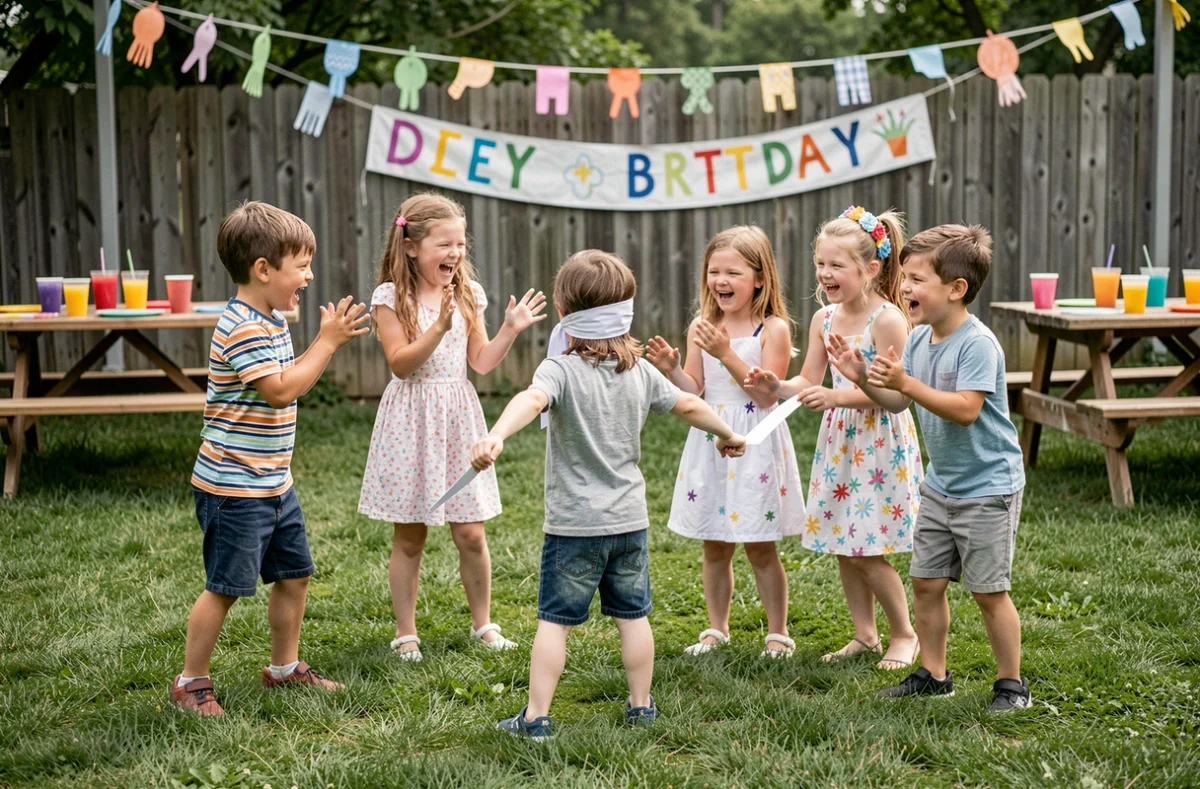
The most common mistake in organizing a child’s birthday is not the lack of activities, but their accumulation. Three well-timed games engage a group better than eight activities rushed through in twenty minutes each.
The total duration of the party determines the number of activities needed. For children under six years old, a two-hour party is more than sufficient. Beyond that, fatigue leads to conflicts and tears, complicating group management.
Treasure Hunt: The Most Adaptable Format According to Age
The treasure hunt remains the most versatile birthday game. Its main interest: it structures the party time around a narrative thread, channeling the group’s energy toward a common goal.
For younger children, visual clues (photos, drawings) replace written riddles. For children aged seven or eight and up, riddles or codes to decipher add a dimension of thought. The theme of the treasure hunt can mirror that of the decorations (pirates, space, animals) without additional purchases.
Also plan for quiet times between two directed activities. A drawing corner, a coloring table, or simply an open space allows children who wish to take a break. These pauses reduce collective over-excitement and give organizing parents a few minutes to prepare for the next step.
Waste-Free Birthday Gifts: Favor Experiences Over Disposable Items
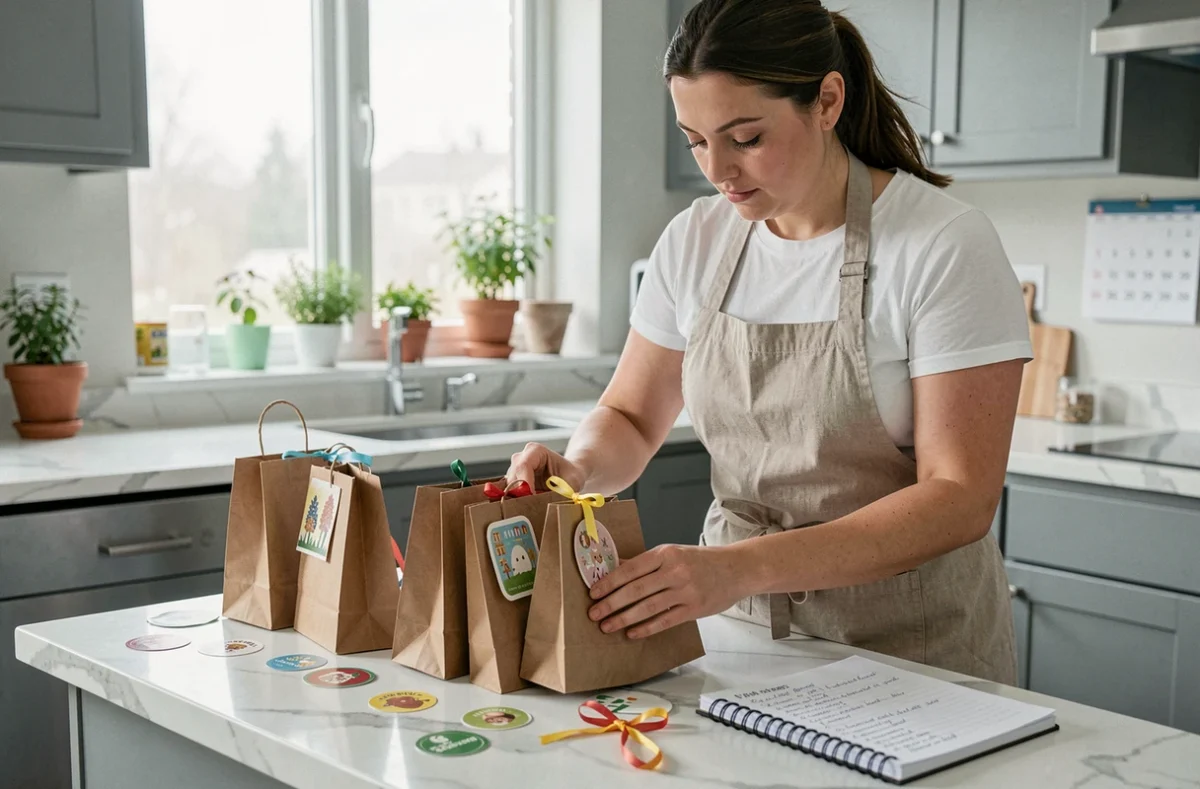
Recent recommendations aimed at low-impact birthdays highlight workshops, outings, activity books, and reusable games rather than single-use items. This approach applies to both gifts from the child’s parents and the surprise bags distributed to guests.
Replacing plastic gadgets with a small book, a packet of seeds to plant, or a voucher for an activity (cinema, pool, creative workshop) reduces the volume of waste produced by the party. Reusable decorations (fabric garlands, washable bunting, non-disposable tableware) contribute to the same logic and can be amortized over several birthdays.
On the cake and snack side, homemade preparations generate less packaging than individual industrial products. They also allow for better control of ingredients, which directly relates to the allergy issue addressed earlier.
The overall budget for a birthday organized at home with durable supplies is not necessarily higher. Savings made on disposable tableware and candy bags offset the initial purchase of reusable items, provided they are kept from one year to the next.